The thin steel cables that run from the bottom corner of the door to the spring drum carry the door's full weight on every cycle. When one snaps or jumps the drum, the door drops crooked and the system becomes unsafe to use. Don't run the opener — call the Genie.
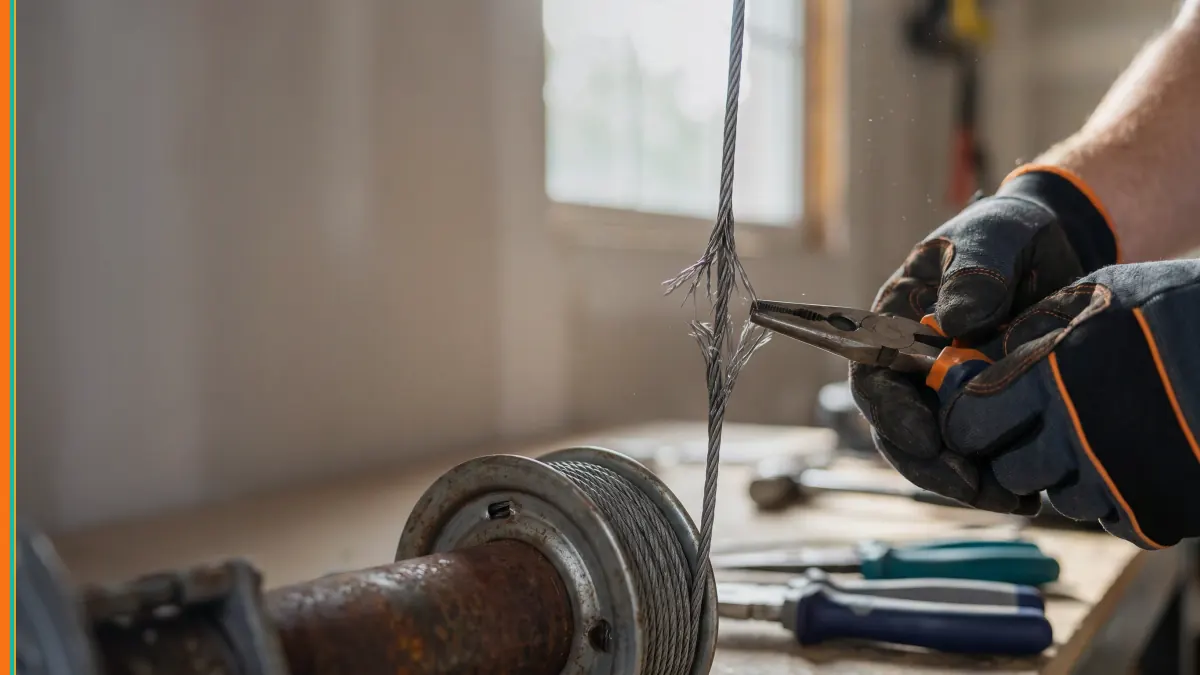
Cables hold the door against gravity. When one fails, several things happen at once:
Running the opener at this point either snaps the second cable, lets the door wedge crooked in the track, or both. Park outside until the tech arrives.
The cables connect the bottom bracket of the door to the cable drum at the end of the torsion spring shaft (or to the bottom of an extension spring on side-mount systems). When the door opens, the spring unwinds and the cable winds onto the drum. When the door closes, the cable plays back out.
Common failure modes:
| Failure | What's wrong | Fix |
|---|---|---|
| Snapped cable | Wire fatigue, rust, or shock load from spring failure | Replace both cables, inspect drums and bottom bracket |
| Frayed cable, still intact | Strands breaking one at a time; cable will snap soon | Replace before failure |
| Cable jumped the drum | Drum loosened on the shaft, or door went off track and unwound the cable | Reseat cable on drum, lock drum to shaft, balance test |
| Cable wound unevenly on drum | One drum slipping during operation | Tighten drum set screws, may need new drum if grooves are stripped |
| Cable corrosion at the bottom bracket | Salt, road chemicals, or humidity rust the cable end | Replace cable; consider stainless cables in coastal markets |
Same logic as springs:
Most homeowners call cables "wires" — same part, same fix. This page covers the symptom-side context.
Cable failures often follow spring failures (and vice versa). Combined repairs save labor.
A snapped cable that lets the door go off track turns into a more complex repair fast.
These city pages own the exact local garage door cable repair keyword cluster for each market.
A cable problem can look like one loose wire, but it's really a balance problem. Once one side stops lifting evenly, the door can twist fast.
If you see a cable hanging or your door dropped crooked, don't try one more opener cycle. That's usually the moment your repairable door becomes a bent-panel problem.
Standard galvanized cables last 8 to 15 years in dry climates, 5 to 10 years in coastal or salt-exposed areas. Stainless cables cost more upfront but last longer in humid environments — worth specifying in places like Savannah, San Antonio, or Vancouver.
If you can see broken strands on the cable, it's days from full failure, not weeks. Once enough strands break, the remaining ones snap one after another. Replacing a frayed cable proactively is a normal-priority service call. Replacing one after it fails is an emergency.
Salt air corrodes the steel strands from the outside in. The cable looks fine, then strands start breaking inside the bundle. Stainless steel cables resist this and are a worthwhile upgrade in Savannah, coastal Texas, and humid Pacific Northwest markets.
Not always — but often it makes sense. The tech is releasing spring tension to do the cable work. Adding spring replacement at that point is a small additional labor charge. If your springs are 7+ years old, it's usually worth doing both at once.
Yes. The most common collateral damage is bent panels (from the door dropping crooked) and pulled rollers (from the door wedging in the track). The tech inspects for this on arrival; sometimes the cable is the only fix needed, sometimes additional parts get added to the bill.
Same-day dispatch, full balance check before the tech leaves.
Call (833) 602-3065