The horizontal bar above your garage door holds enough stored energy to break bones — which is exactly why torsion spring work is a tech-only repair. Local pros replace yours the same day, in matched pairs, with the correct cycle rating for your door weight.
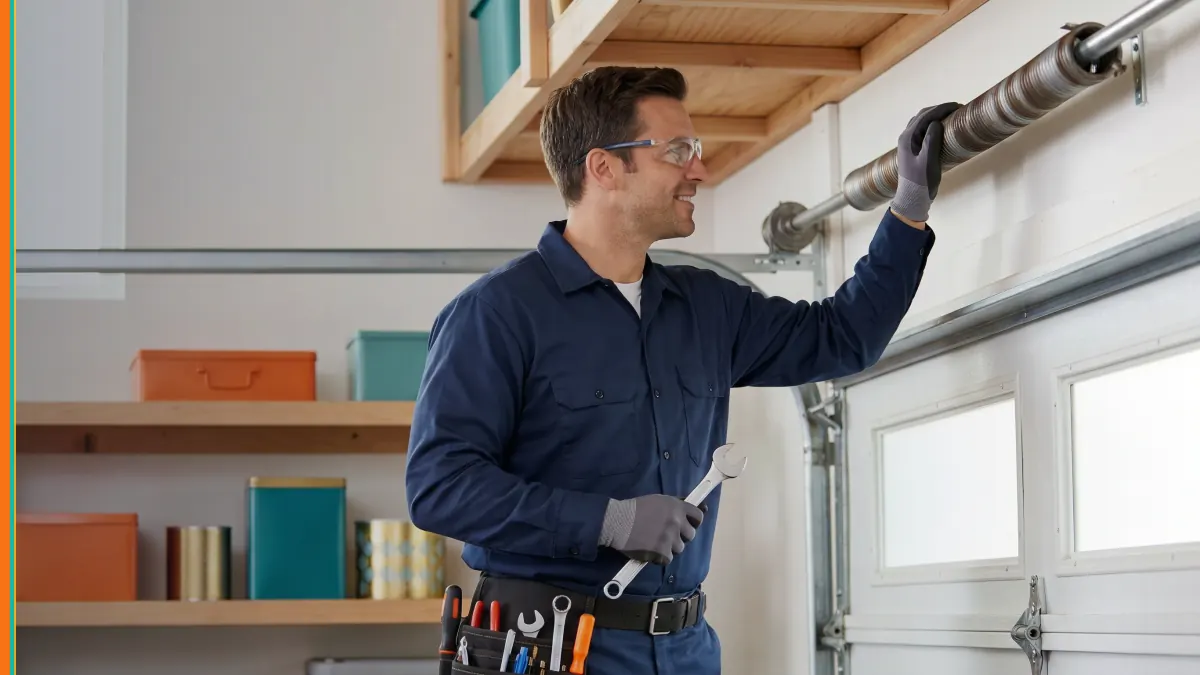
Torsion springs hold roughly 200 to 400 pounds of stored energy in the wound coil. When that energy releases unexpectedly — from a slipped winding bar, a wrong-sized spring, or improper unwinding — it goes somewhere fast. ER doctors see torsion spring injuries every week.
Specifically:
Stand inside the garage with the door closed and look up at the wall above the door opening:
| What you see | Spring type |
|---|---|
| One or two coils on a horizontal steel bar across the header | Torsion spring |
| Long stretched springs running parallel to the side tracks (left and right) | Extension spring |
| No visible springs at all | Either a hidden side-mount torsion or an EZ-set system — tech can confirm |
Most garage doors built since 2003 use torsion. Heavier doors (insulated, wood, oversized) almost always do because torsion handles the weight better.
Three numbers must match the door, not just the old spring:
A reputable tech weighs the door (or uses the manufacturer's weight chart) and matches the spring to the actual load. Wrong-sized springs are the #1 reason a door "just had springs replaced" needs them done again two years later. Ask your tech what cycle rating they're installing — 10,000, 15,000, or 20,000 — and what door weight it was sized for.
"Cycle" means one full open-close. Most homes do 4 to 6 cycles per day if the garage is the primary entrance, fewer if it's just for cars.
| Spring rating | 4 cycles/day | 6 cycles/day | 10 cycles/day |
|---|---|---|---|
| 10,000 cycles (standard) | ~7 years | ~4.5 years | ~2.7 years |
| 15,000 cycles | ~10 years | ~7 years | ~4 years |
| 20,000 cycles | ~13.5 years | ~9 years | ~5.5 years |
| 25,000+ cycles (heavy use) | 17+ years | ~11 years | ~7 years |
For most homeowners using the garage as the primary entrance, the math on stepping up to 15,000- or 20,000-cycle springs is straightforward: a small upcharge upfront for several extra years before the next service call.
Total visit time: 60 to 90 minutes for a standard residential door. Heavier doors, two-car-wide doors, or those needing additional repairs (cables, drums, rollers) take longer.
The general spring-repair page covering both torsion and extension systems, ideal if you're not sure which type you have.
The lift cables and springs share the same workload. Replacing them together saves a future trip.
Realistic price ranges, what drives them up, and which add-ons are actually worth saying yes to.
These city pages own the exact local garage door torsion spring repair keyword cluster for each market.
A broken spring is one of those repairs where confidence can get expensive fast. The door may look normal, but the part that carried the weight is no longer doing its job.
If you heard a bang or your door suddenly feels heavy, don't test it three more times. Tell the tech what happened first. That little detail usually matters more than your guess about the brand or model.
Technically possible. Practically discouraged. The tools are inexpensive but the procedure has zero margin for error: wrong cycle counts cause re-failure, slipped winding bars cause hand and arm injuries, and improper sizing wrecks the cables and drums. Most homeowners who try it end up calling a tech anyway, after spending money on the wrong-spec springs.
That depends on the cycle rating of the spring installed and how often you cycle the door. A 10,000-cycle spring on a primary-entrance garage lasts about 7 years; a 20,000-cycle spring lasts about 13. The math is on the cycle table above.
Single-spring systems work on lighter doors (single-car, uninsulated). Two-spring systems are standard on heavier double doors, insulated doors, and wood doors. If you have two and one breaks, both get replaced — the surviving spring is on borrowed time.
That's actually a tell. Openers strain when the spring is losing tension. If your opener has been working harder, your spring was failing — and the gear inside the opener may need to be checked too. The tech can do both during the same visit.
Slightly, on parts. The labor is similar. But torsion typically lasts longer, runs quieter, and is safer when it fails (the spring stays on the bar). For most homeowners the upgrade pays back.
Garage Door Repair Genie techs, matched cycle ratings, full balance check — same-day in most markets.
Call (833) 602-3065