A snapped spring is the #1 reason garage doors stop lifting. The door now weighs 250 to 400 pounds with no help from the counterbalance — which is exactly why you don't lift it yourself. Garage Door Repair Genie techs replace springs same-day in most service areas.
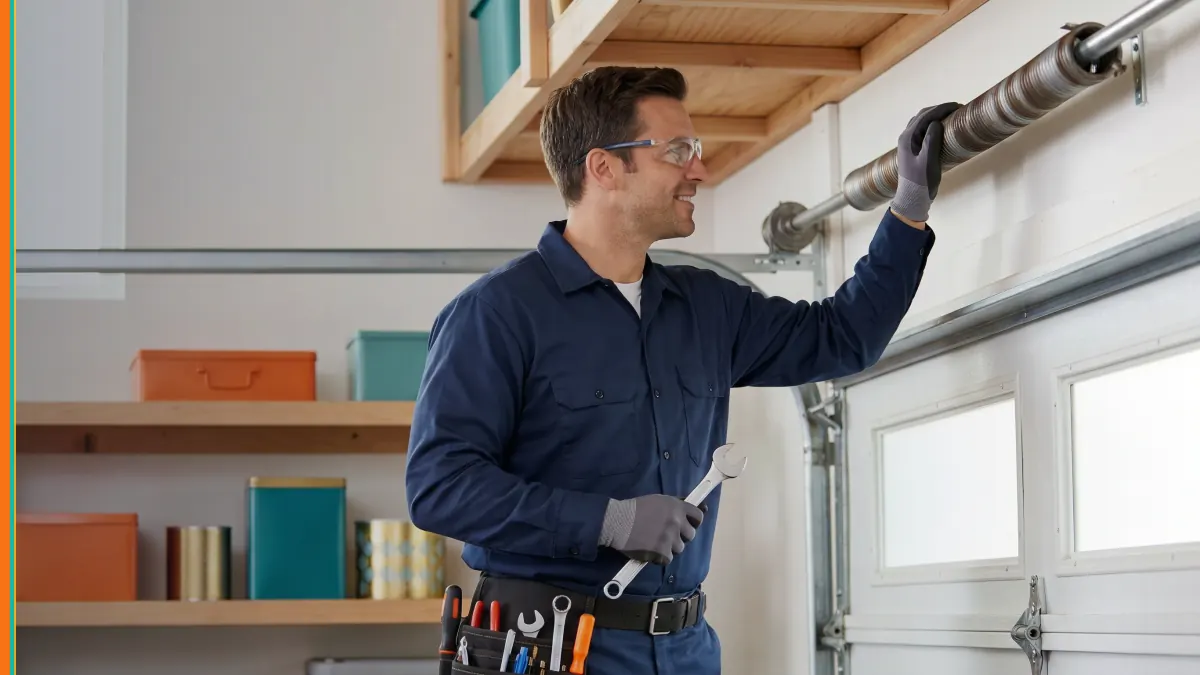
Do not force a garage door with a broken spring, snapped cable, or off-track section. Garage doors are heavy and can be dangerous when the counterbalance system fails.
Garage doors use one of two counterbalance systems. The type you have determines the part cost, the labor time, and how often it'll need to be done again.
| Type | Where it sits | Typical lifespan | Repair complexity |
|---|---|---|---|
| Torsion spring | Horizontal bar mounted above the door header | 15,000 to 20,000 cycles (10 to 15 years typical) | Higher — high tension, requires winding bars and matched cycle rating |
| Extension spring | Long springs running along each horizontal track | 8,000 to 10,000 cycles (7 to 12 years typical) | Lower part cost but always paired with safety cables to contain a snap |
Most homes built since the early 2000s use torsion springs because they're more durable, smoother to operate, and safer when they fail (the spring stays on the bar instead of flying across the garage). If you have an older door, you may have the side-mounted extension style.
Want a deeper torsion-specific breakdown? See the torsion spring repair page.
Spring failure is one of the most diagnosable problems on a garage door. Look for one or more of these:
This is the most common pushback from homeowners and one of the most important things we talk through. Here's the math:
For deeper pricing context, see spring replacement cost.
While the tech has your door open and the tension released, certain add-ons cost very little extra labor and prevent the next service call:
Cables and springs work together. Replacing both at once costs less than two separate visits.
Force-setting calibration after a new spring matters — the opener has to relearn the new balance.
If a cable jumped during the spring break, the door may be slightly off-track too.
These city pages own the exact local garage door spring repair keyword cluster for each market.
If the spring above the door has a visible gap, choose torsion spring replacement. If the springs run along the horizontal tracks, choose extension spring service. The trade-off is matching: the right spring costs more than a generic swap, but it keeps the door balanced and protects the opener.
A broken spring usually announces itself with one sharp bang, then the door feels too heavy to lift or opens only a few inches.
Cycle rating matters when the garage is the main entrance. A standard 10,000-cycle spring fits light use, while 15,000- to 20,000-cycle options fit heavier daily traffic.
A balanced door should stay near halfway open during a manual lift test; if it drops or shoots upward, the spring setup still needs adjustment.
A broken spring is one of those repairs where confidence can get expensive fast. The door may look normal, but the part that carried the weight is no longer doing its job.
If you heard a bang or your door suddenly feels heavy, don't test it three more times. Tell the tech what happened first. That little detail usually matters more than your guess about the brand or model.
Standard residential springs are rated for about 10,000 cycles — roughly 7 to 9 years for a household that opens the door 4 times a day. Higher-cycle springs (15,000 or 20,000) cost a little more upfront and can last 12 to 15 years; we generally recommend them for any homeowner who uses the garage as the primary entrance.
No. Even if the door still moves, the opener is now lifting twice the weight it was designed for. You'll burn out the opener gear, stress the cables to the failure point, and risk the door dropping unexpectedly. Stop using it.
It's possible but not recommended. Most reputable techs will replace both because the second is days or weeks from failing, the door balance will be off if you don't, and the labor is the same. If you genuinely insist on one, most will accommodate — but understand the tradeoff.
National ranges run $150 to $400 for a typical residential job, with two-spring jobs trending toward the higher end. Cost depends on door weight, spring type, cycle rating, and whether cables are replaced at the same time. We have a full breakdown on the spring cost page.
Most calls placed before noon get same-day service in our active markets. Spring failures are treated as priority dispatch because the door is unusable.
Yes — springs and openers work together but aren't matched parts. The tech will recalibrate the opener's force settings after the new spring is installed so the system runs smoothly.
Same-day Garage Door Repair Genie techs, properly rated springs, full balance check before they leave.
Call (833) 602-3065