If you just heard a loud bang from the garage and the door now feels impossibly heavy, the counterbalance spring failed. The door is unsafe to lift, the opener will damage itself trying, and forcing it makes the repair much more expensive. Stop, step back, and call.
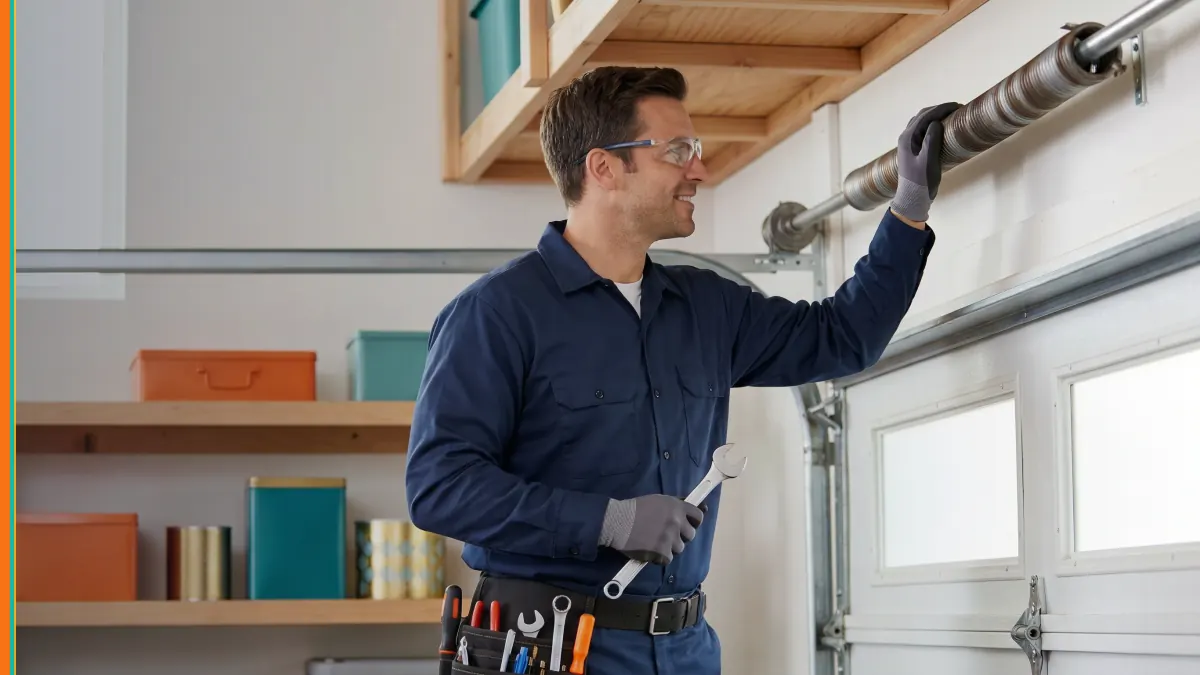
Garage doors weigh 250 to 400 pounds. The springs above the door (or along the side tracks) hold the door's full weight in stored tension so the opener — or your arms — can lift it easily. When a spring snaps, all that tension releases at once, usually with a noise like a 2x4 hitting concrete or a small gunshot.
Right now, your door has no counterbalance. The opener is rated to lift maybe 30 pounds — not 350. If you keep pressing the wall button, you'll watch one of three things happen: the opener gear strips, the cables snap from being yanked, or the door cracks a panel from being lifted unevenly. Each of those turns a spring repair into a much bigger bill.
Most "garage door won't open" calls aren't springs — but a snapped spring has very recognizable signatures:
If you see two or more of those, it's a spring. If you only see one, it could still be a cable, opener, or track issue — the tech will sort it out on arrival.
| Action | Why it's a bad idea |
|---|---|
| Repeatedly pressing the opener button | Strips the gear or burns out the motor |
| Lifting the door manually with the opener disengaged | You're holding the full door weight; you can drop it on yourself |
| Pulling the red manual release while the door is up | Door will fall, fast, with nothing to stop it |
| Driving under a partially-open door | Door can drop while you're underneath |
| Trying to wind a partially-intact spring with hand tools | This is the most common ER injury from garage doors |
| Letting kids or pets approach the door | Falling doors and panel collapses are unpredictable |
This is the most common pushback we hear when the tech recommends replacing both springs. The reasoning seems logical — only one is broken, so only one needs replacing. The reality:
For more on the cost math, see spring replacement cost.
Three pieces of info make the trip faster:
If you can also confirm whether you have torsion (horizontal bar above) or extension (long springs along the sides), the tech can stock the truck more precisely.
Both spring types, signs of failure, and what the visit covers.
For homes with the horizontal bar above the door — cycle ratings and sizing.
What homeowners actually pay, and which add-ons are worth saying yes to.
If your door is stuck open and the house is exposed, this is the page that applies.
A broken spring is one of those repairs where confidence can get expensive fast. The door may look normal, but the part that carried the weight is no longer doing its job.
If you heard a bang or your door suddenly feels heavy, don't test it three more times. Tell the tech what happened first. That little detail usually matters more than your guess about the brand or model.
Strongly discouraged. The door now weighs roughly 300 pounds with no counterbalance. Even if you can lift it, the door can fall back down on you, your hands, your car, or your kids. If you absolutely must do it, get at least two adults of comparable size, lift slowly, brace the door open with C-clamps on the track, and don't drive under it — the C-clamps can slip. Better path: park outside until the tech arrives.
Almost never. Springs are considered normal wear-and-tear maintenance, like a car alternator or a hot water heater element. The exception is when the spring failed because of an external event like a power surge, a vehicle hitting the door, or a storm event — sometimes those qualify under the personal property or accidental damage clauses. Read your policy or call your agent.
60 to 90 minutes for a standard residential door. Add 15 to 30 minutes if cables get replaced at the same time. Add more for heavier doors, two-car-wide systems, or doors needing additional repair beyond the spring.
Sometimes a snapping spring whips around and damages cables, drums, or even nearby panels. The tech will inspect for collateral damage on arrival. Most spring snaps are clean failures with no other damage; occasionally something else needs replacing. Either way, you'll know the full picture before any work starts.
Not necessarily. Springs are wear items with a finite cycle life regardless of door age. A 5-year-old door used as the primary entrance can hit end-of-life on its 10,000-cycle springs. A 25-year-old door used twice a week may still be on the originals. The door panels, tracks, and opener can long outlive the springs.
Same-day dispatch in most service areas. Stop forcing the door — let the Genie make this disappear.
Call (833) 602-3065